Posts

Showing posts with the label New Mexico

New water works, a new water czar, and the same challenges ending 2011

Last post of 2011! It’s been too long, yet again. So this will be the last post for this calendar year of 2011. There are so many issues and events of interest to cover, since last August, I’m not sure where to start. So here I’ll simply start with some regional issues, first with Texas (?!), then moving on to the usual New Mexico water issues, challenges, and battles. There was also big news out of Santa Fe, namely with the appointment of a new state engineer. Finally I drop a plug or two for some books that have recently appeared that should be of interest to all residents of the Southwest if you care (at all) about water in our region. NPR had an interesting story on water issues in Texas specifically that I thought was worth sharing – see below. I’m not sure if they are “things you didn’t know” about water in the Lone Star state, but some are intriguing. Water in Texas: http://stateimpact.npr.org/texas/2011/11/15/five-things-you-didnt-know-about-water-in-texas/ The water year i...

Adjudication Round-table (March 18, 2011 report)

Image
Well, more than two months have gone by (again), and I'm in the position of playing a bit of catch-up for the purposes of this blog. Hopefully I can begin to re-commit to these writing activities now that stand-up teaching (always a curious phrase) is over for me at CC. I wanted to report on a fascinating, and inter-disciplinary, conversation hosted by Sylvia Rodriguez (Prof Emeritus, UNM Anthropology) this past March 18, 2011 at the Department of Anthropology at the University of New Mexico. The point of the conversation was the water adjudication process in New Mexico , putatively, but we wandered far and wide on topics ranging from ecosystem rights to water, to Powell' original "watershed" democracy proposal in the 19th century, to how other states have coped (or haven't) with the demands of a general stream adjudication. After some formal and informal introductions, our discussion started to hone in on the real issues of "why adjudication" started...

The glowing calm of the nuclear aquatic

Image
Hello again - as I begin the submersion into a week 2 field excursion with my "political ecology of the Southwest" course here at Colorado College, I wanted to share a few thoughts about this particular course. We adopted a theme of "nuclear borderlands," an obvious play on Joseph Masco's (2006) excellent book by the same title, and one of our focus points is the relationship between the nuclear era and water quality in northern New Mexico . And it's difficult to talk about this region without discussing the role of "the lab" in every day life. I'm referring to Los Alamos National Laboratories here, and the small (federal company) town of Los Alamos, perched on the Pajarito Plateau. We are beginning our week with a guided tour of the political ecology of northern New Mexico, hitting on the major historical-geographic discussion points that have to be understood in context, highlighting the cultural diversity of the region. Among the topics we...

Back to the Neoliberal Future (again)

Image
Feliz dia de San Isidro! Get ready for a lot of links and tenuous ties -- A series of stories and posts for those of you tracking the future of water use, consumption, and pricing schemes. Many of my fellow aquabloggers make a big deal about whether water is either a commodity or a human right; depending on how "Chicago-school" you are, your own reaction probably varies from "of course you pay for it" to "of course everyone should have access to water as a right." I won't critique positions (yet) but will offer this set of narratives and resources. Try this paper ( link ) for a perspective on this right to water language; alternatively you can find a number of posts on this issue from the Hayekian perspective at Aguanomics , a recent post is  here . The problem with this kind of rhetoric (price it or "make it a right") is that it stays at the binary level (yes/no, black/white, right/commodity). Are there really only two choices to make here?...

Quickpost: Unadjudicated MRG poses problems for water management

Please see Aquadoc's site for the context, but here's the quick link to a paper by Pease (2010) on the difficulties of managing (and transferring) water in an unadjudicated basin in New Mexico. Yes, it's the Middle Rio Grande. There are lessons here for all Westerners, particularly if you live in an unadjudicated basin. h/t to MC . Addendum : The entire issue of the JCWRE is available on-line here . The article by Pease is only one of several on water re-allocation issues in the Western U.S.

Review of Carey (2010), and why it's important to New Mexico

Image
A few weeks ago, I attended the ASEH (American Society for Environmental History) meetings in Portland, Oregon . As usual, it was a great set of sessions and associated, er... field activities. An intellectual highlight was getting to meet the author of " In the Shadow of Melting Glaciers ," Mark Carey , an historian who teaches at Washington & Lee (VA). Why would New Mexicans want to read about Andean society and climate change? Isn't this just about Peru? Obviously, New Mexico doesn't have any "glaciers" to worry about anymore, but the implications of the book for NM are numerous and revolve around the issue of snow-pack and future climate scenarios. The table of contents (below) from Carey ( 2010, Oxford U Press ) should also help people decide whether they need to buy it right now, or just look in their libraries for it. "Introduction 1. Melted Ice Destroys a City: Huaraz, 1941 2. Geo-Racial Disorder beneath Enchanted Lakes 3. Engineering the...

Shill alert - On "Old Mexico" and cattle

Image
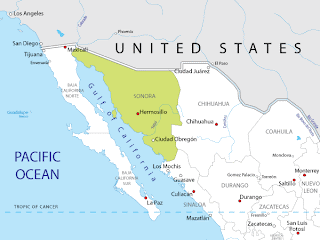
Disclaimer : This is a self-serving post as it discusses the release of my first book . So, finally, Private Revolutions is due out this month. You can find it at the press site itself, of course, but also at Amazon and Barnes & Noble , or Powell's too (usually a little cheaper at the first two). The premise of this book is fairly simple, even if the years of work that went into it were not simple at all: Ranchers are not an amorphous body of rural evil-doers oppressing communal farmers and ranchers in Mexico. Aaron Bobrow-Strain has also made this argument for Chiapas, Mexico, in his own book . In fact, many "private" ranch owners are also still communal farmers and herders, contra the work of so much social science in Mexico (and Latin America in general). I also give some attention to the larger context of ranching, such as gender, economics, and the ecology and management of private ranches in northern Mexico (read: Sonora ). I'm happy it's out, an...

The Urbanization of Western Waters...

Image
Consider this post an "interlude" on purely New Mexican affairs, as we spend some time thinking about urban water demands in the West . That's not entirely true, really, since it was recently announced that a desalination plant may appear on the horizon in northern Albuquerque to treat the vast reserve of brackish water lying under the surface. Who knows, Rio Rancho might be able to boast of the lowest "goiter" incidence rate in the United States if that water is salty enough (ha!). The recent decision by the Nevada State Supreme Court came as a shocker to Las Vegas hydromogul Pat Mulroy . It was another reminder of how important the "urbanization of water" is across the Western United States. The setback for Las Vegas (NV) is notable; the groundwater piping would have extended far into the basins north of the city , and the demise of this system has also set back a possible deal with the state of Utah over water resources. What cities in the Wes...

Chile, New Mexico, and water markets

Image
In the last post, I compared the country of Bolivia with the state of New Mexico and how both "state" entities recognized customary water traditions and rights in national or state statutes, respectively. Here, I want to reflect forwards, in imagining what New Mexico might anticipate or mitigate if free markets on water are aggressively pursued. Perhaps no better case exists on water privatization than the water policies of Chile ; its reforms to water in 1981 are still a New World benchmark for pursuing a private pathway to water pricing and re-allocations. This comparative piece relies on several publications by Bauer (2004, 2005), Budds (2009), Shiveley (2001), and Swyngedouw (2009). Under the thumb of General Pinochet , the country of Chile enacted aggressive free-market policies in the 1981 Water Code (1981). The code recognized not only that water rights were "private," but that the resource itself was a commodity ready for full marketization. The code...

New Mexico, Bolivia, and customary water traditions

Image
A few days ago, I compared the interesting parallels (and differences) between New Mexico and the country of Spain. This time around, it's New Mexico and Bolivia ; here I want to create an opening for analyzing how both entities (again, a state, and a State respectively) have recognized local, customary water traditions. As you will see and appreciate, there are strong material parallels between how irrigators in Bolivia operate and how acequias in New Mexico handle water management and governance. The differences, however, are just as fascinating and have largely to do with how the claims to water are wrapped around cultural identity. My good colleague, Tom Perreault (Syracuse - Geography), wrote about the recent recognition in Bolivia of local "usos y costumbres" with special focus on the national irrigators' movement. Granted, that country has pursued an arguably anti-neoliberal path on water goverance in recent years, as Tom has suggested. But both Bolivia an...

Water in Spain and "New Spain"

Image
As I hinted a few days ago, there are some remarkable parallels between the historical geographies of water in the country (" S tate") of Spain and the s tate of New Mexico. I credit the information on Spain to a colleague in anthropology at McGill University (call him Ismael ; no, really). See back a couple of posts but Ismael's "Modernizing mountain water" appears in the co-edited volume Water, Place, and Equity (MIT Press, 2008)*, and is focused on the transformation of Pyrenean water use and its governance, largely on the Spanish side. I have put in a coarse table to outline the parallels between Spain's legal history on water and those of New Mexico. Table - NM by author, Spain from Vaccaro 2008 (230) TIME LINE                     New Mexico                        ...

Preview: New Mexico's 16th annual Water Dialogue

Image
As I get ready to attend the 16th annual statewide meeeting of the New Mexico Water Dialogue (sic), a quick look at the agenda of the event looks intriguing, even if these are largely about experts and agents involved with water resources talking to each other. For example, a "panel" that begins at 10, ends with a noon cut-off for "lunch." No question and answer session? Call me jaded after so many academic conferences where a small group is only addressing a small group (usually itself). We'll see -- participation is certainly not explicitly scheduled or listed so it'll be interesting if it's a repeat of the MRG Water Assembly I attended a few months ago, or some new beast. Pardon my skepticism. You can see the old topics from the MRG version along with some presentations here . But I hope it's a good meeting, since I'm not sure I'll have the stamina to attend the Buckman Diversion Project public meeting on water quality (= LANL connect...

Is adjudication a pre-cursor to neoliberal water policies?

Image
I've been reading through an edited volume entitled " Neoliberal Environments " (Routledge, 2007) and one of the small contributions, a section foreward by Brennan and Theodore (2007, 153-154), lists some of the key ideas emerging from the literature on neoliberal governance. By neoliberalism , they really mean the latest phase in capitalism, so bear with me as we get a little jargon-rich. My point in listing these out here is that if you substitute the word "adjudication" for neoliberalism, it actually works well. I'm working on an article that argues that adjudication was necessary to have any kind of free-market implementation for water resources in New Mexico.* So below I've listed these side by side, with a check if the substitution works, a check - if it is awkward or too soon to tell, and a check+ if the parallel is downright creepy. The list, please remember, is generated as a way of summarizing what social scientists, especially geographers, ...

Water, past and present

Image
As 2009 closes, I'm more than mid-way through this research stay in New Mexico focused on acequias and adjudication. A couple of recent posts from elsewhere caught my eye, one coming from Emily Green's excellent blog ( ChanceofRain ). This rather nostalgic, and halfway complete, post by a contributor on Spain's system of irrigation works and irrigation mentality was pretty interesting. As one critic noted, however, the post had it only partly right and I would also point to Glick's excellent work on water in Valencia for those wanting to track down the roots of Old World contributions to our New World variants. While the Romans had already put down an impressive hydraulic management template on the Iberian Peninsula, the Moors clearly added on, complemented existing features, and also introduced important institutional aspects of water management. It makes me want to track down the old norias (water wheels) once common in Spain and Portugal. Only a few in Mexico rema...

Climate politics, resilience, and stale appropriation

Image
As the world's leading politicians are meeting, hoping to hammer out some piddling gesture towards solving climate change (as a contruct) by reducing emissions, this is simply a brief "poke in the eye" at prior appropriation . Happy Thanksgiving New Mexico! That we have the "first in time, first in right" attitude towards water, and apparently not much else, is simply ludicrous. And if the Western States hope to really enforce future "calls on water" by senior water rights holders, they're dreaming at this point. Even in Colorado, the state engineer...excuse me, State Engineer, can issue a " futile call " (scroll down to 'f') if trying to enforce a senior right will result in no water. Remember 2002? You would if you were in Colorado or New Mexico at the time; depending on the data you consult or the model you believe in, it may have been the dryest year in 300+ years. It made the early 1950s drought look cuddly for these two s...

Acequias and Adjudication - A research blog for a long-awaited sabbatical...finally.

Day 1 : I can't believe the sabbatical has started, eagerly anticipated, highly deserved (right?). Day 2 : Oh shit, I have to finish a textbook? First update: August 26, 2009 -- finally feel like I'm gaining traction on this new research, even if I'm been "doing it" for almost three years now. Still, no time like free time to actually do interviews, forage in archives, and get basic questions answered. More later on adjudication. Second Update: ALL IRB (institutional review board) materials are available from the blog author; please just write me and I'll send you a full description of the research, potential questions, and waiver forms as required by my institution.